The Connection Between Payment Gateways and Live Casino Tournament Entry Patterns
Written by Yves Washington · Jun 21, 2026
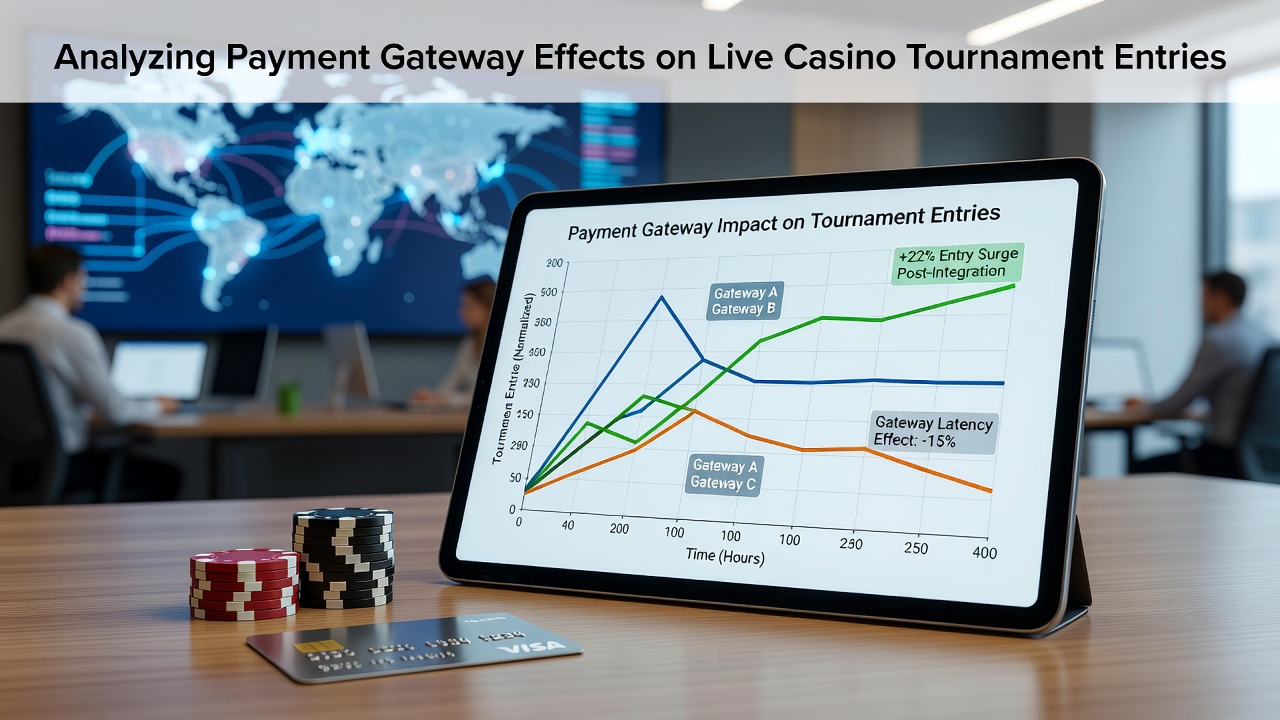
The Connection Between Payment Gateways and Live Casino Tournament Entry Patterns
Payment gateways serve as the bridge between player accounts and live casino platforms, and their technical specifications directly shape how many participants register for tournaments that unfold in real time. Observers note that processing speed, fee structures, and regional availability all factor into entry decisions, especially when tournaments require immediate funding confirmation before play begins. Data from multiple jurisdictions shows variations in entry volumes tied to the dominant payment methods accepted at each operator.
Core Mechanics of Gateway Performance in Tournament Settings
Live casino tournaments often open registration windows that close once seats fill or a deadline passes, which puts pressure on gateways to complete authorizations within seconds rather than minutes. Researchers at several gaming analytics firms have tracked how delays beyond 30 seconds correlate with abandoned carts, while sub-10-second approvals maintain higher completion rates. Gateways supporting instant bank transfers or digital wallets tend to reduce friction compared with card networks that trigger additional verification steps under certain regulatory frameworks.
Transaction costs also influence player behavior because many tournaments advertise fixed buy-ins that leave little room for extra fees. When a gateway adds percentage-based charges or flat fees, the effective cost rises and some participants shift to operators offering lower-friction alternatives. Figures compiled by industry monitoring groups indicate that platforms highlighting zero-fee e-wallet deposits see measurable upticks in tournament sign-ups during peak promotional periods.
Regional Regulatory Influences on Gateway Selection
Different licensing authorities impose distinct requirements on payment processing that in turn affect tournament accessibility. In Nevada, the Gaming Control Board mandates strict audit trails for all financial transactions, which can lengthen approval times for certain card-based methods. Canadian provincial regulators, by contrast, have encouraged broader adoption of Interac-based systems that clear faster within domestic networks. Operators serving multiple markets must therefore maintain parallel gateway integrations to keep entry processes consistent across borders.
European operators face additional layers of anti-money-laundering checks that sometimes trigger mid-transaction reviews. Those who studied entry logs across EU-licensed sites report that players using pre-verified wallet accounts encounter fewer interruptions, resulting in steadier participation curves for scheduled tournaments. The same logs show that new users relying on direct bank links experience more drop-offs when verification queues lengthen during high-volume evenings.
Gateway-Specific Effects Observed in 2026 Data
By June 2026, several live tournament series had published anonymized entry statistics that highlight differences across payment rails. Platforms emphasizing cryptocurrency gateways recorded quicker onboarding for international players, although volatility in conversion rates introduced separate variables into the decision process. Traditional card gateways, meanwhile, retained strong domestic volumes in markets where cashback or reward programs offset any processing delays.

One study released by a North American research consortium examined over 40,000 tournament registrations and found that gateways with built-in tokenization maintained higher repeat-entry rates because returning players bypassed repeated card-entry steps. The same analysis noted that operators offering multiple gateway choices per transaction saw fewer incomplete registrations overall, since players could select the fastest available option at the moment of sign-up.
Security Protocols and Player Confidence Factors
Security features embedded in gateways also play a measurable role in entry decisions. Multi-factor authentication requirements, while protective, add steps that some players abandon when a tournament clock is ticking. Data aggregated by independent testing laboratories shows that gateways employing biometric confirmation or device-based authentication reduce these drop-offs compared with one-time password systems sent via SMS.
Trust signals such as visible regulatory seals and real-time transaction status updates further encourage completion. Those who've examined player support logs observe that queries about payment status spike when gateways lack transparent progress indicators, and unresolved questions frequently lead to missed registration windows.
Operational Adjustments by Tournament Organizers
Organizers have responded to these patterns by integrating gateway performance metrics into their scheduling tools. Some now stagger registration opens according to the average processing times of the most common payment methods used by their target audience. Others provide pre-registration funding windows that allow players to top up accounts hours or days before a tournament begins, sidestepping real-time processing risks altogether.
These adjustments appear in operator reports filed with licensing bodies, where entry volume trends are broken down by payment channel. The reports consistently link higher participation to environments where at least three distinct gateway types remain available without additional surcharges.
Conclusion
Payment gateway characteristics continue to shape live casino tournament entry volumes through measurable differences in speed, cost, and verification demands. Data collected across regulated markets demonstrates that faster, lower-friction options sustain steadier registration rates, while added steps or fees correspond to measurable declines. Operators tracking these variables adjust their integrations and scheduling practices accordingly, and the patterns documented through June 2026 underscore the ongoing relationship between processing infrastructure and participation outcomes.