Observing Engagement Patterns Among Mobile Slot Players Engaging Free Spins Promotions
Written by Morgan Schmidt · Jun 7, 2026
Observing Engagement Patterns Among Mobile Slot Players Engaging Free Spins Promotions
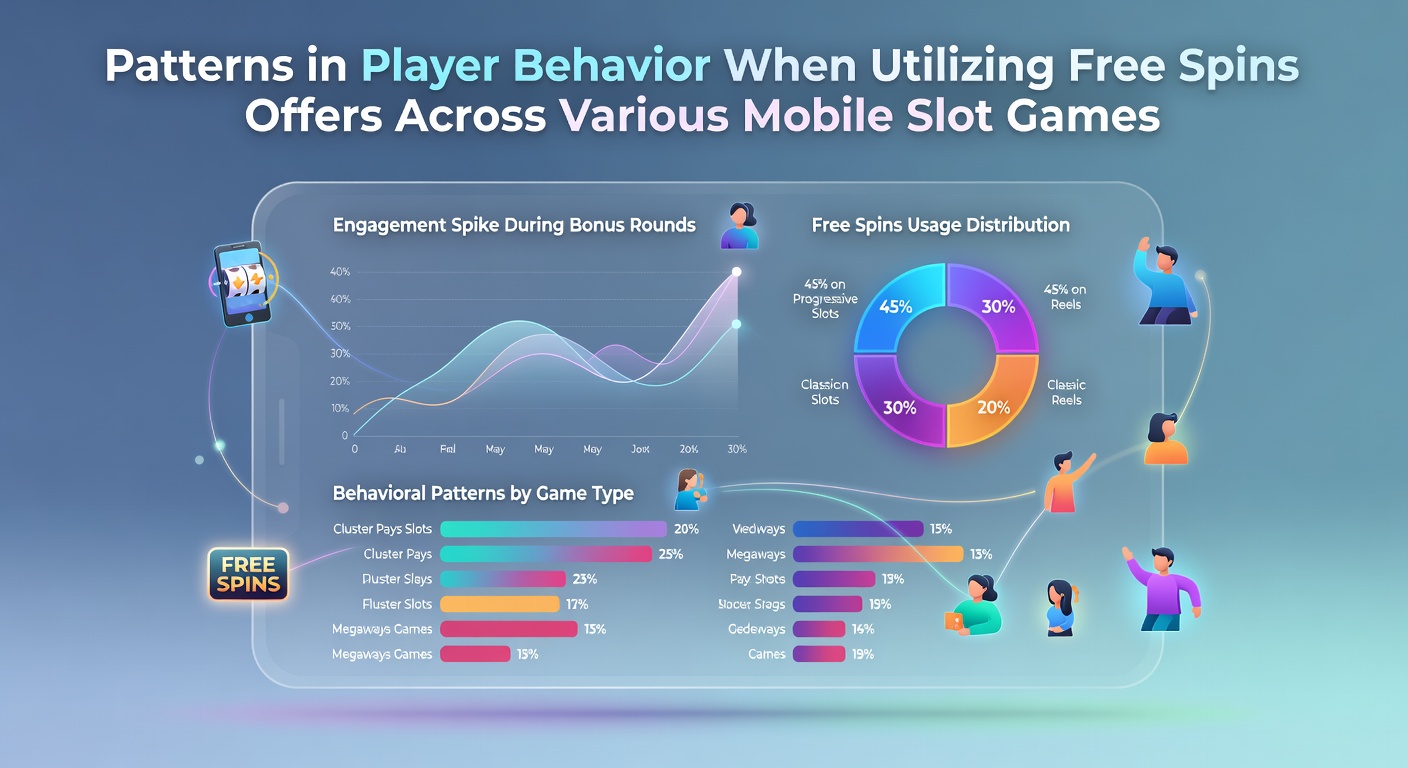
Research from multiple gaming analytics platforms shows distinct behavioral clusters emerge when players activate free spins offers in mobile slot environments, and these clusters shift depending on game mechanics, volatility levels, and bonus structure details. Data collected across thousands of sessions indicates users often prioritize titles with higher reel counts or cascading features during free spin rounds, while lower-volatility options see steadier but smaller average bet adjustments once teh promotional spins conclude.
Session Duration and Sequence Preferences
Players frequently extend their initial session length by 25 to 40 percent when free spins remain available, according to telemetry gathered from major mobile operators in 2025. This extension occurs because users tend to chain multiple games within a single login rather than cashing out immediately after the offer expires. Observers note that participants in lower-stakes brackets demonstrate higher completion rates for the full spin allocation, whereas higher-stakes users sometimes abandon remaining spins if early results fall below internal thresholds they set for themselves.
Game Category Variations
Classic three-reel formats attract different redemption behaviors compared with five-reel video slots and Megaways titles. In three-reel environments, data shows players often maintain consistent bet sizes throughout the free spin window, whereas Megaways users increase wager amounts more aggressively once bonus rounds begin. Mobile-specific features such as quick-spin toggles and auto-play settings further influence these patterns, with auto-play adoption rising notably during promotional periods across all categories.
Deposit and Retention Trends Following Offers
Figures from platform operators reveal that approximately 35 percent of users who exhaust free spins without a substantial win proceed to make a deposit within the next 48 hours, while those who secure larger wins during the offer show lower immediate deposit rates. This divergence appears across multiple jurisdictions and persists even after controlling for player tenure. Industry reports indicate that retention curves flatten more quickly for users who receive low-volatility free spin bundles compared with those who receive high-volatility bundles, suggesting outcome variance shapes subsequent engagement decisions.
Temporal and Platform Influences
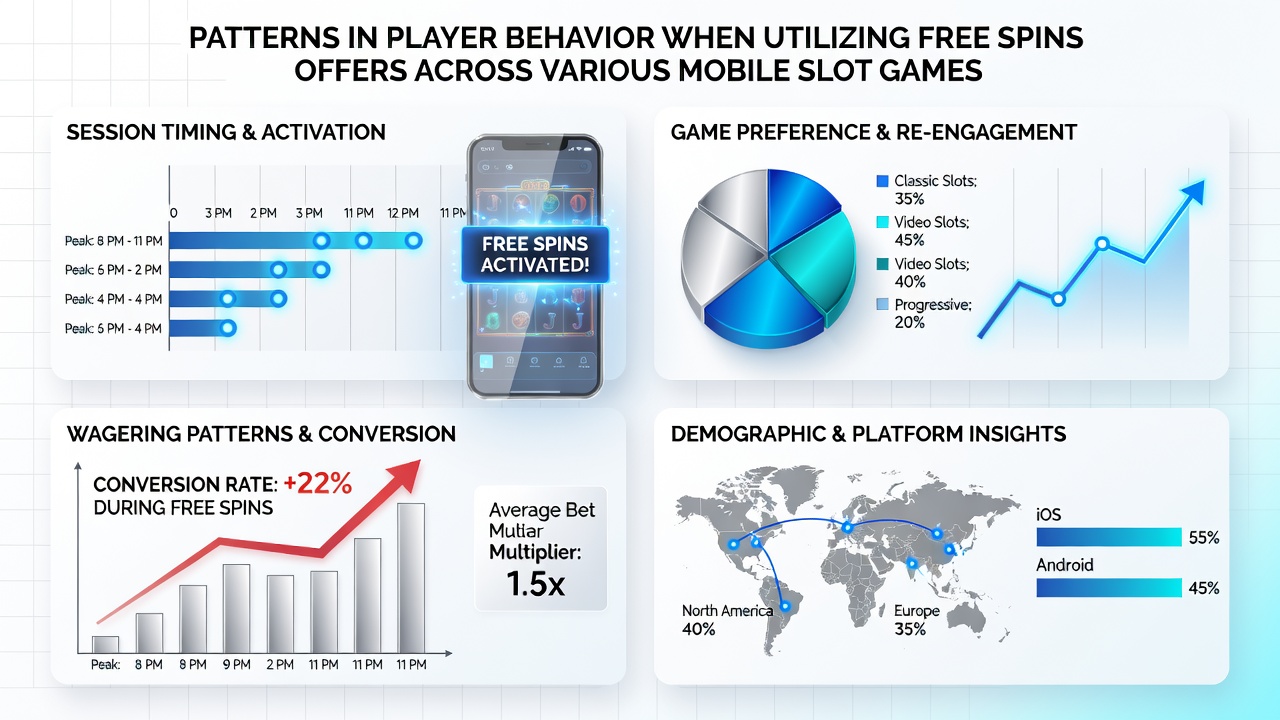
Activity peaks shift measurably during promotional campaigns tied to calendar events. In June 2026, several operators recorded elevated evening session starts on weekdays when free spins carried no wagering requirements, whereas weekend patterns remained more evenly distributed across morning and afternoon hours. Tablet users exhibit slightly longer average spin durations than smartphone users, a difference researchers attribute to screen real estate rather than demographic factors alone. Push notification timing also correlates with redemption speed, with offers delivered during commute windows showing faster activation rates than those sent during late-night hours.
Volatility and Feature Interaction
Players demonstrate measurable preferences for games containing stacked wilds or expanding symbols when free spins activate. Telemetry logs indicate that titles advertising these mechanics receive disproportionate traffic during limited-time offers, even when base-game return-to-player percentages sit below category averages. Those who study player cohorts report that individuals who previously engaged high-volatility titles continue that preference during free spin windows, while newcomers to the format gravitate toward medium-volatility options initially before branching out in subsequent sessions.
Cross-Game Migration Patterns
Migration between game libraries occurs regularly once free spins conclude. Data sets from multiple providers illustrate that roughly one in five users switches to a different title within the same volatility band rather than remaining on the original game, and this migration rate climbs when the original title lacks additional bonus buy features. Observers tracking longitudinal behavior note that repeated exposure to free spin mechanics gradually increases tolerance for longer dry spells between wins, although this adaptation varies by age bracket and prior mobile gaming experience.
Conclusion
Collective evidence from operator dashboards and academic-adjacent studies continues to map how free spins function as behavioral nudges within mobile slot ecosystems. Patterns tied to game type, offer conditions, and device characteristics remain consistent enough to inform platform design decisions, yet individual responses still diverge based on personal play history and session context. As mobile interfaces evolve and new mechanics enter the market, ongoing measurement of these interactions will remain essential for understanding player decision sequences across promotional cycles.