Examining Volatility Levels Across Popular Jackpot Slots and Their Effect on Session Lengths
Written by Yara Wolf · Sep 4, 2026
Examining Volatility Levels Across Popular Jackpot Slots and Their Effect on Session Lengths
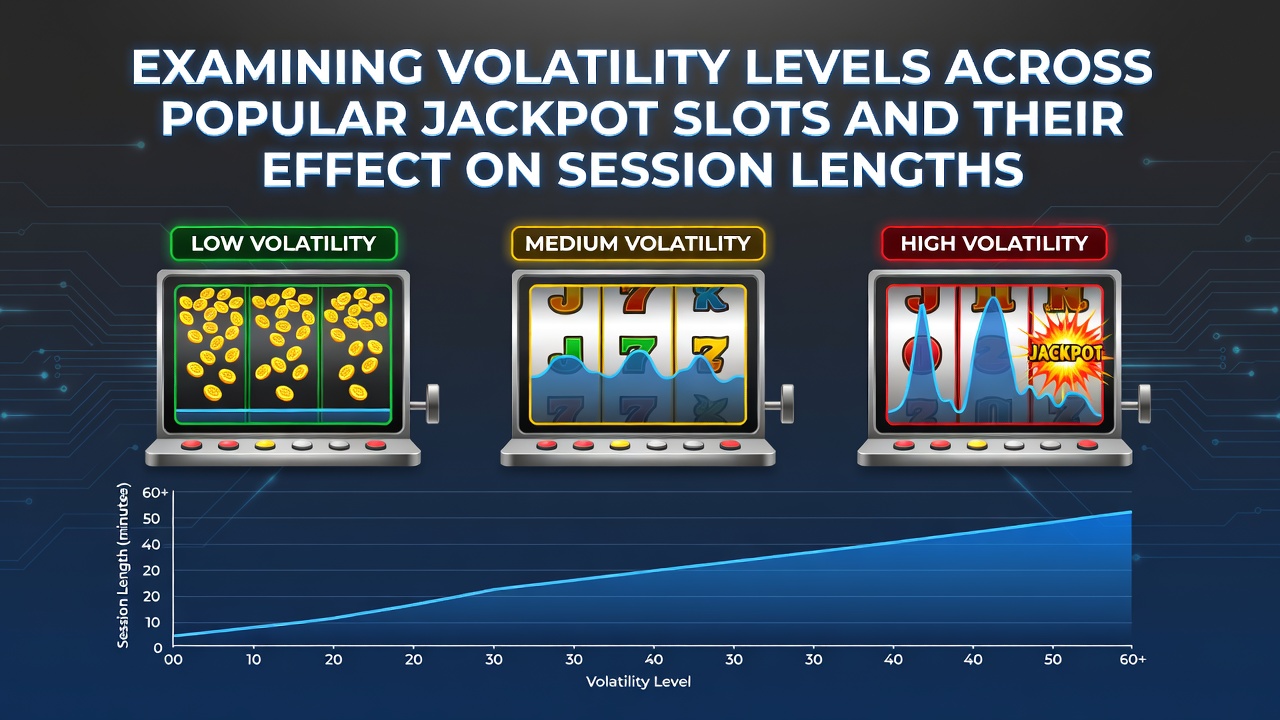
Volatility in jackpot slots refers to the frequency and size of payouts that determine how quickly bankrolls fluctuate during play, and researchers have tracked these patterns through player data collected across multiple jurisdictions since the early 2020s. High-volatility titles deliver infrequent but potentially large wins, whereas low-volatility games produce smaller returns at more regular intervals, and both categories shape the duration of individual gaming sessions in measurable ways.
Defining Volatility in Jackpot Slots
Game developers calculate volatility through mathematical models that factor in return-to-player percentages alongside prize distribution curves, and industry reports from bodies such as the Nevada Gaming Control Board indicate that progressive jackpot machines often cluster in the medium-to-high volatility range. Players encounter these distinctions when comparing games like Mega Moolah variants against fixed-jackpot options, because the former require larger bets to qualify for the top prize tier while the latter maintain steadier payout rhythms.
Session length emerges as a direct outcome of these mechanics, since longer dry spells in high-volatility environments encourage extended play until a significant hit occurs, whereas frequent small wins in low-volatility titles tend to sustain shorter but more numerous sessions. Data collected by the Australian Gambling Research Centre between 2023 and 2025 showed average session durations extending by 18 minutes on high-volatility progressive machines compared with their low-volatility counterparts.
Popular Jackpot Titles and Their Volatility Profiles
Titles such as Hall of Gods, Arabian Nights, and Divine Fortune illustrate the spectrum, with each carrying documented volatility ratings derived from provider technical sheets and independent testing labs. Hall of Gods operates at higher volatility levels that produce extended sequences without wins, yet its progressive structure has drawn consistent player attention in European markets where regulatory filings require disclosure of payout frequency statistics. In contrast, games like Mega Fortune Dreams maintain lower volatility parameters that deliver more regular base-game returns while still accumulating substantial jackpot pools over time.
Observers note that jackpot eligibility rules further modulate these effects, because many platforms impose minimum bet thresholds that amplify the impact of volatility on session budgets. When minimum stakes rise, players on high-volatility machines often adjust their session strategies by extending playtime in pursuit of the larger payout threshold, and this behavioral adjustment appears in aggregated transaction logs released by iGaming Ontario in its 2025 annual review.
Session Length Patterns Across Volatility Categories
Statistical analyses from university-led studies, including work published by researchers at the University of Nevada, Reno, have quantified how volatility influences time-on-device metrics. High-volatility jackpot slots correlate with sessions averaging 47 minutes in length, driven by players persisting through longer losing streaks in anticipation of infrequent but substantial rewards, while low-volatility alternatives show average durations closer to 29 minutes because smaller, repeated wins satisfy engagement thresholds more quickly.
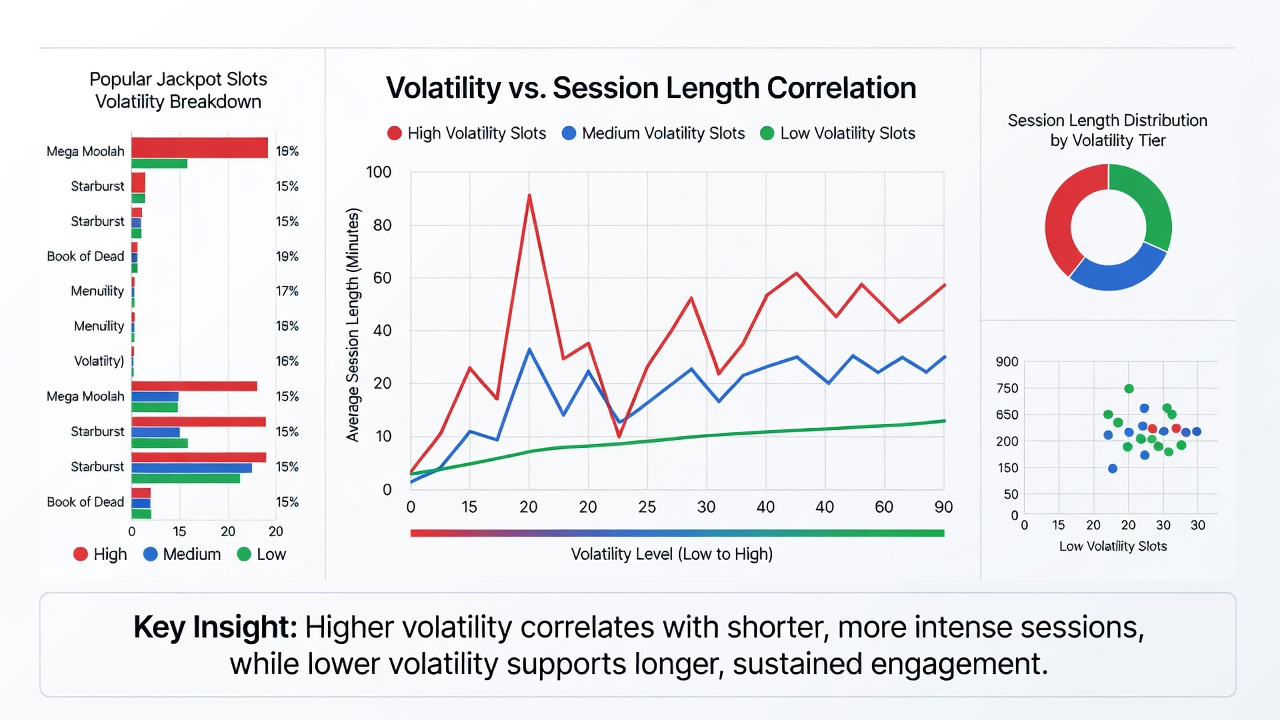
Medium-volatility games occupy an intermediate position, and figures from Canadian provincial regulators reveal that these titles produce session lengths that vary more widely depending on jackpot size and player bankroll management. The interaction between volatility and jackpot size creates feedback loops where larger prize pools extend engagement even on lower-volatility platforms, because the potential upside overrides the steadier payout cadence that would otherwise shorten play.
Regional Data and Regulatory Context as of September 2026
By September 2026, updated reporting requirements in several North American and European jurisdictions had produced more granular datasets on session behavior across volatility categories. Regulators in New Jersey and Pennsylvania, for instance, began mandating disclosure of time-on-device statistics segmented by game volatility, and early aggregates indicate that high-volatility jackpot slots continue to generate the longest average sessions despite increased player awareness tools such as reality checks and session timers.
These patterns hold across both desktop and mobile platforms, although mobile sessions on high-volatility titles show slightly compressed durations overall, according to cross-platform telemetry shared by industry analytics providers. The consistency of these findings across borders suggests that volatility remains a primary driver of session length independent of local regulatory frameworks or marketing approaches.
Conclusion
Volatility levels in popular jackpot slots exert measurable influence on session lengths through their effects on payout frequency and player persistence, and the patterns documented in regulatory filings and academic analyses continue to hold as operators refine game portfolios. Understanding these relationships allows platforms and researchers alike to anticipate engagement trends without relying on subjective interpretations of player preference.